The blog flows in
Through RSS or a Markdown folder, with connections to WordPress, Ghost, Webflow, Zapier, n8n and webhooks. New posts are prepared every 4 hours.
Publiqa turns each blog post into posts for nine networks and publishes nothing without a person’s sign-off. This page covers why we designed it that way, how it is built and its stack. Pricing, demo and sign-up are on the product’s site.
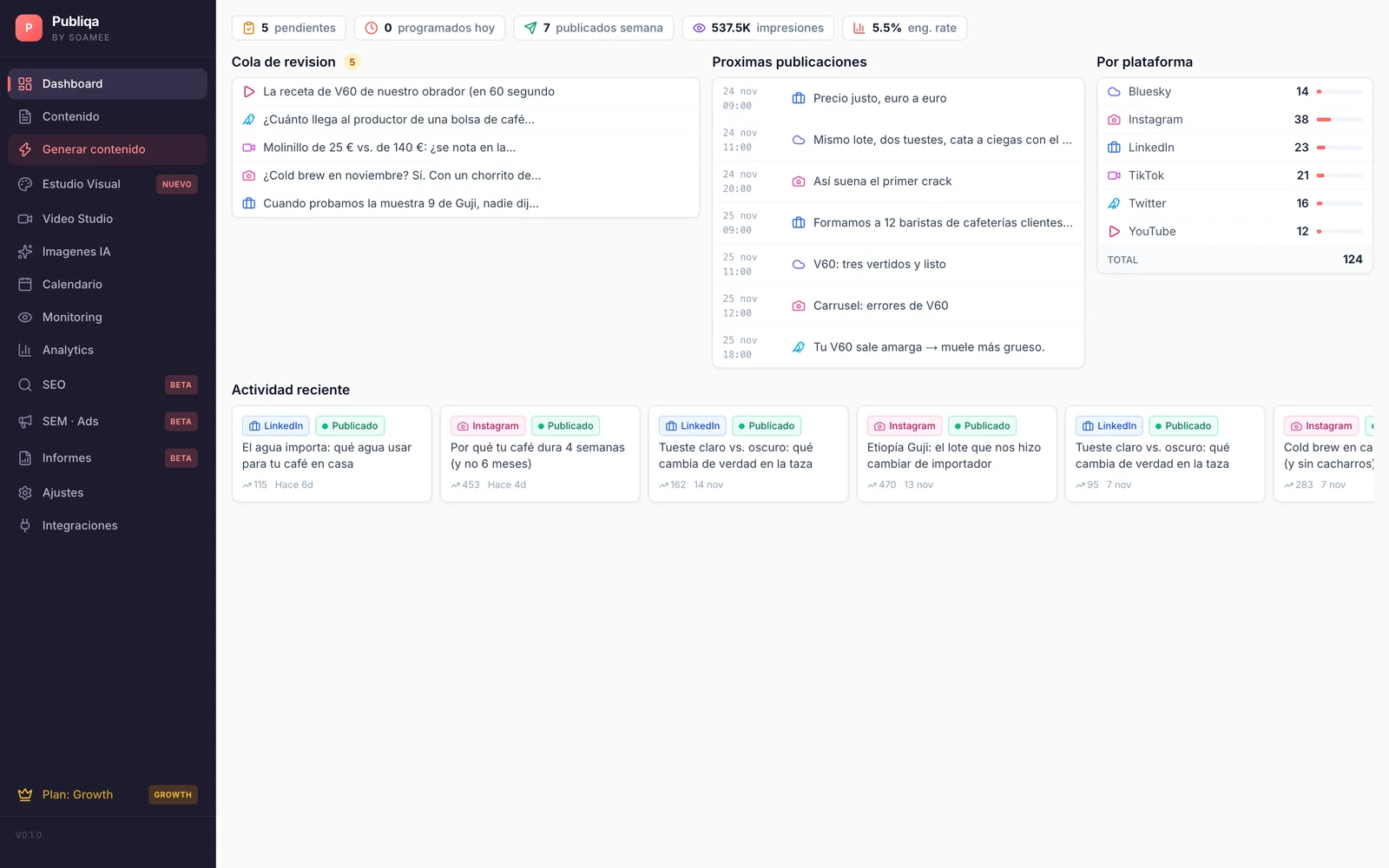
Publiqa operating facts published at publiqa.soamee.com.
A team that runs a blog wants every post to reach its social networks too. Each network asks for something different: a thread on X, a story on LinkedIn, a caption on Instagram, a short script for TikTok or YouTube. Rewriting it by hand for nine networks is the job that ends up being skipped.
A language model drafts those nine versions in seconds. The risk sits on the other side: something going out in a brand’s name without anyone having read it. That was the design requirement from day one.
There was a third, more technical problem: publishing at a set time through nine different APIs, each with its own limits and failures, without an outage leaving gaps in the calendar that nobody notices.
The blog stays the source. Publiqa reads it, prepares the drafts and waits for someone to decide.
Through RSS or a Markdown folder, with connections to WordPress, Ghost, Webflow, Zapier, n8n and webhooks. New posts are prepared every 4 hours.
Each post is rewritten with the length, tone and format of each network, with images generated for each publication and, from the Growth plan, avatar videos.
A review queue with a preview per network. Drafts are edited, approved or rejected, and every decision is logged with its date. Rejected pieces never go out.
Each network has its day and time slots. Approved pieces take the next free slot and publish on their own, with up to three attempts; if it fails, the piece is marked as failed.
Monitors keywords on Reddit, X, Bluesky and Hacker News, scores relevance and suggests a reply. A person answers.
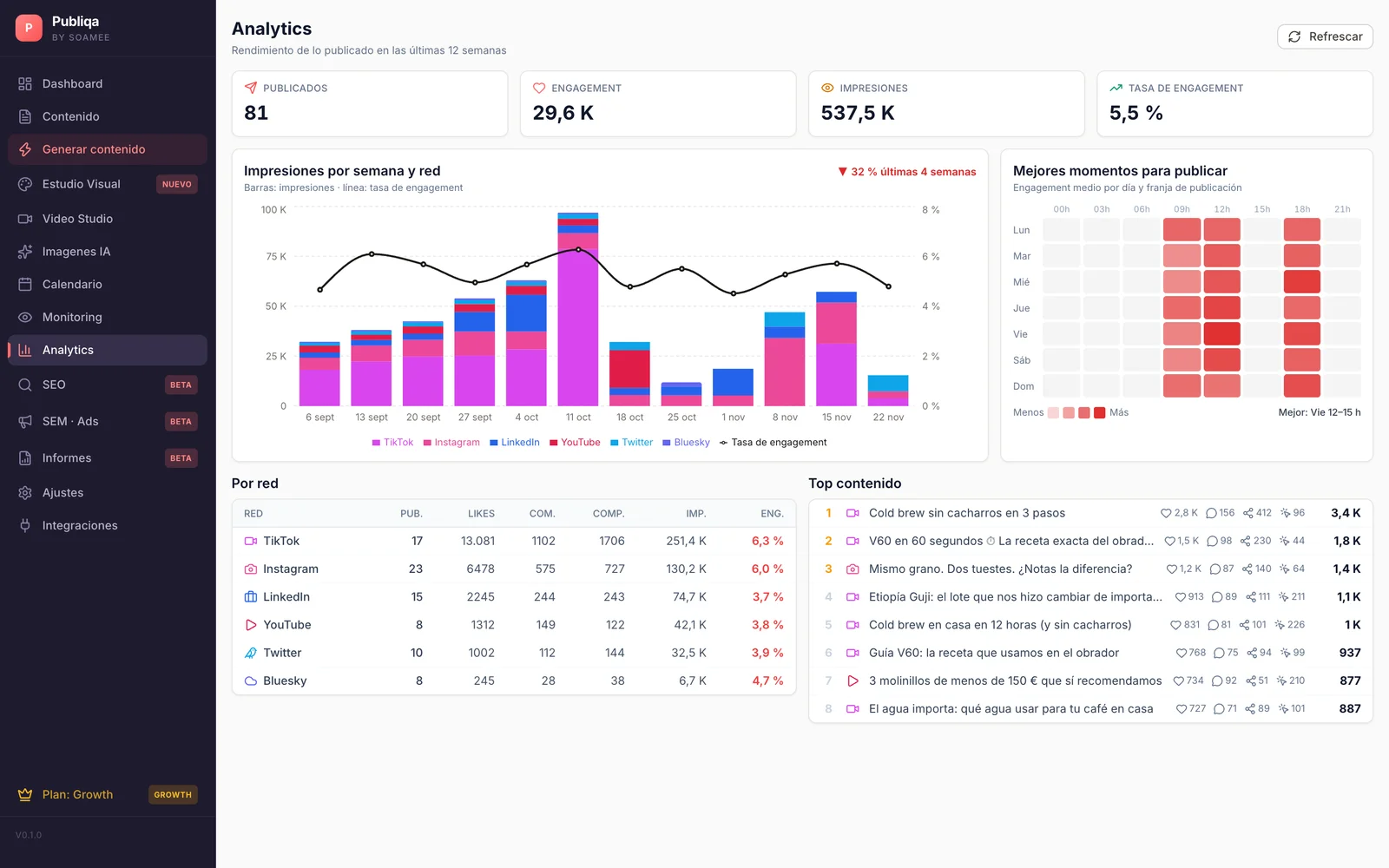
Weekly trend per network, best times to post and a monthly report. In early access, SEO and Google Ads modules with the same rule: the AI proposes and a person approves.
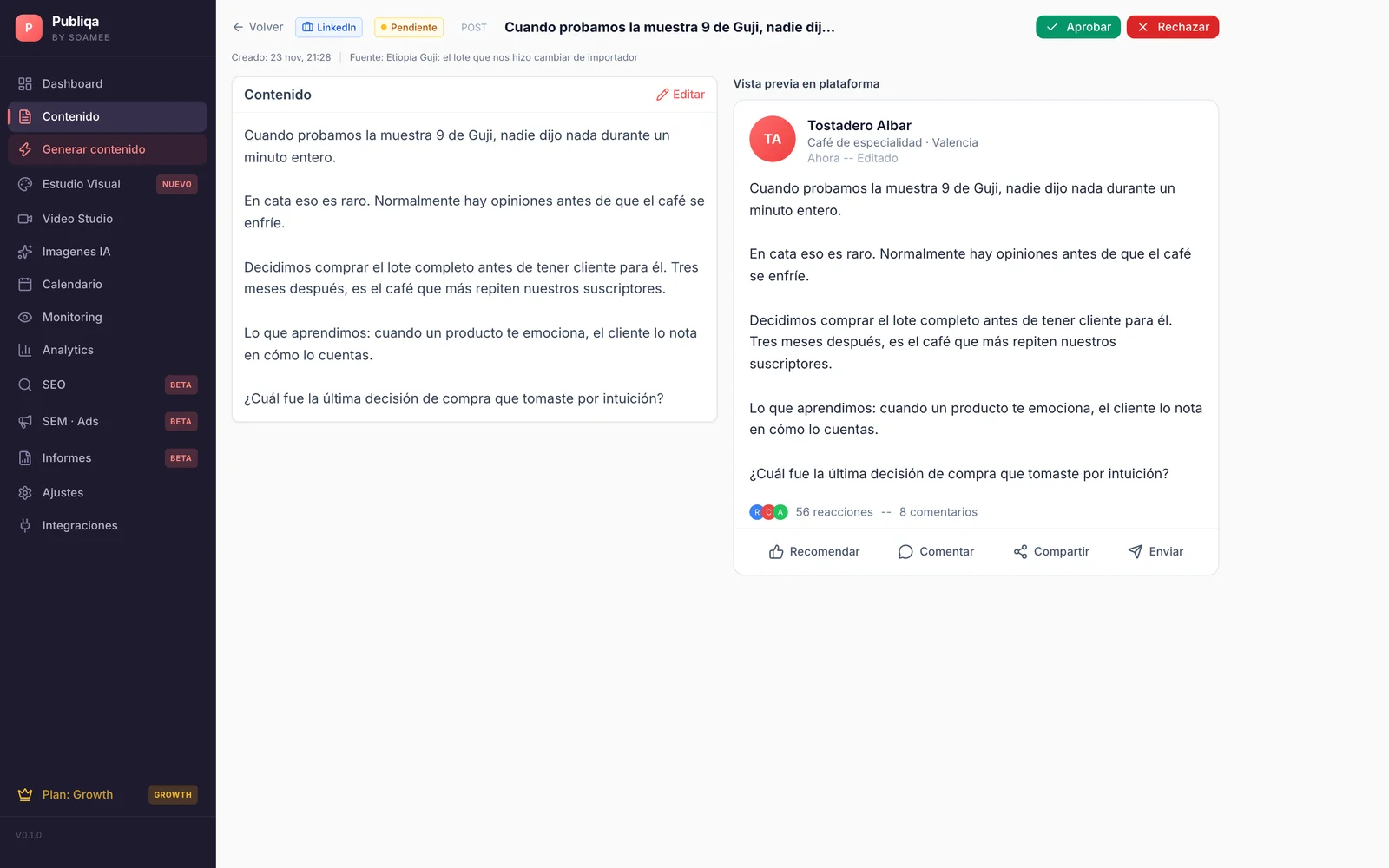
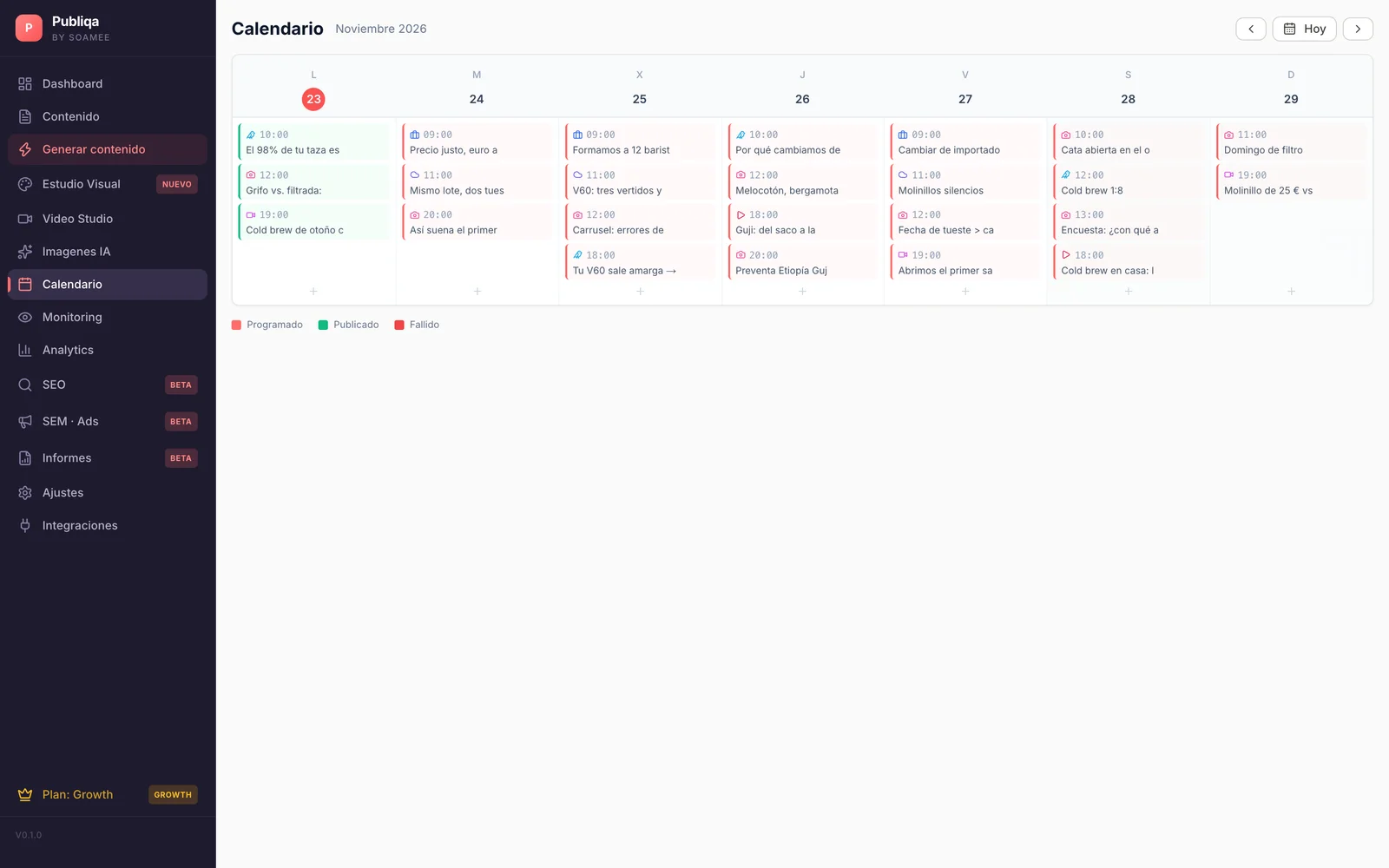
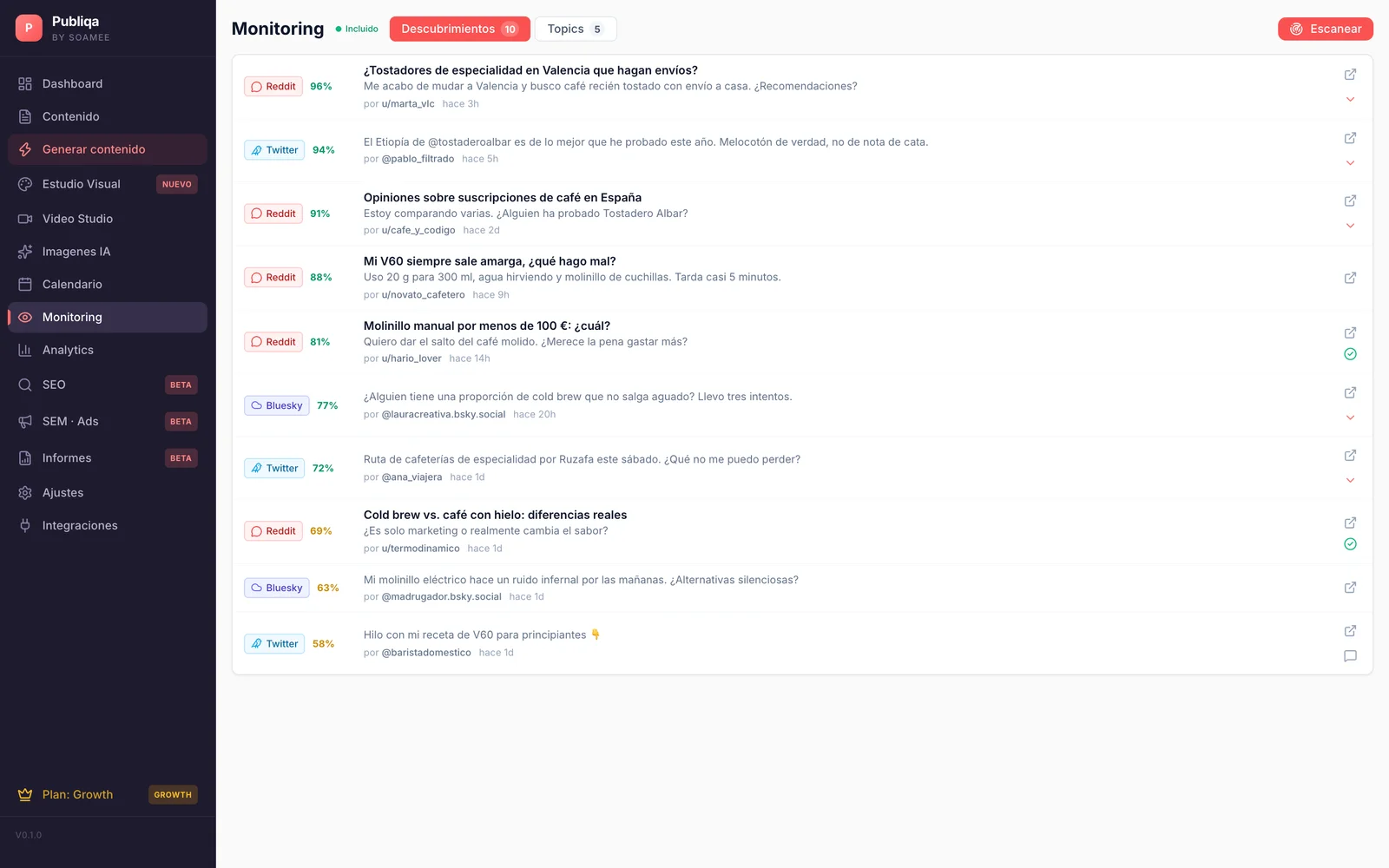
A TypeScript monorepo with an API, a dashboard and one database per brand. The delicate part is the publishing queue.
Turborepo + pnpm
Monorepo with the API, the web dashboard and a shared database package.
NestJS
API handling post ingestion, draft generation and the integration with each network.
BullMQ + Redis
Publishing queues with retries: each approved piece is a job scheduled for its slot.
Prisma + SQLite
One database per installation, which is what keeps each brand’s data apart.
Scheduled jobs
Reading the blog every 4 hours and periodic reports.
Next.js + React Query
Dashboard with the review queue, calendar, conversations and analytics.
The AI drafts and proposes; a person decides. Every decision is logged and nothing goes out without approval.
AI agents for businessesNine APIs with different limits and outages behind a queue with retries and visible states.
Process automationDashboard, plans, per-client installation and support: what it takes for software to be sellable.
B2B SaaS developmentPricing, a 20-minute demo with your own posts and sign-up are on the product’s site.
Go to publiqa.soamee.com (site in Spanish)Content, calendar, pricing and demo, on Publiqa’s site.
From blog post to 9 networks, with human review
No commitment. We reply within 24 hours, and within 48 hours you have a proposal with scope, timeline and budget. No fine print.